


Mind Hacks & Brain Maps—Unlock Psychology with Mind Mapping.
Your Brain, But Smarter: Why Mind Mapping is a Game-Changer for Psychology
Ever wondered why you think the way you do? Or how you can rewire your brain for better focus, motivation, and emotional balance?
Psychology gives us powerful insights into how we learn, remember, and process emotions—but it’s often wrapped up in dry textbooks and jargon-heavy theories.
That’s where hand-drawn Mind Mapping comes in.
By turning abstract concepts into clear, visual connections, Mind Mapping helps you grasp psychological theories, understand yourself better, and even apply brain hacks to boost memory, motivation, and decision-making.
Let’s dive into four expert secrets on how Mind Mapping can unlock the mysteries of your mind.
🧠 Secret #1: Understand How Your Brain Learns (and Trick It Into Learning Faster)
Want to learn faster, smarter, and with less effort? You need to understand how your brain takes in information.
The Science of Learning, Visualised
Cognitive psychology tells us that your brain:
✅ Remembers visual information better than text alone (hello, Mind Maps!)
✅ Learns by association—the more links between ideas, the better you recall them
✅ Thrives on colour and creativity—which is why dull black-and-white notes = mental snooze-fest
How to Hack Your Learning with Mind Maps
1️⃣ Draw Your Knowledge – When studying psychology (or any topic), turn key concepts into a Mind Map with bold colours, images, and strong connections.
2️⃣ Make Links Between Ideas – Show how concepts relate—e.g., connect memory theories to real-life recall tricks or link Freud’s unconscious mind to dream analysis.
3️⃣ Teach It to Someone Else – Re-explain a theory using your Mind Map as a guide. Teaching forces your brain to deepen understanding and lock in the knowledge.
🎯 Example:
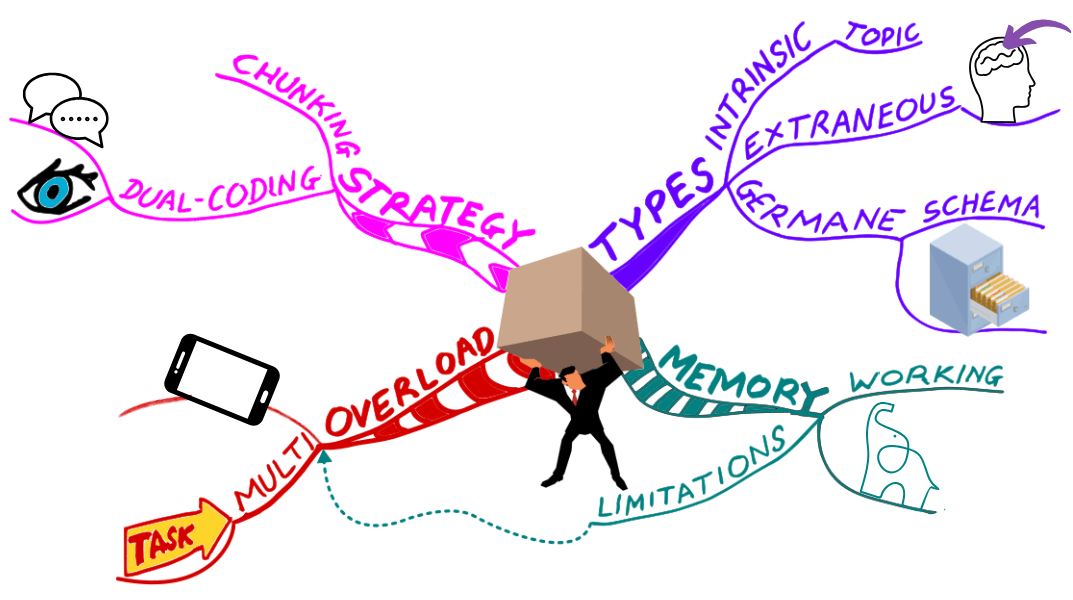
Studying Cognitive Load Theory? Create a Mind Map that:
Shows the three types of cognitive load (intrinsic, extraneous, and germane).
Links them to real-world examples (e.g., why multitasking overloads your brain).
Illustrates brain-friendly learning strategies (e.g., chunking information, using dual coding with visuals).
🔥 Why This Works: Instead of passively reading, you’re actively engaging your brain in learning—just the way it likes it.
💭 Secret #2: Mind Map Your Way to Self-Awareness & Emotional Intelligence
Ever reacted emotionally in a situation and later thought, "Why did I do that?"
Psychologists have spent decades studying emotions, habits, and behaviour—but understanding your own mind can still feel overwhelming.
Use Mind Maps to Map Out Your Emotions
1️⃣ Start with a Central Image – Draw a visual representation of your mood or emotional state. A storm cloud? A sun? A tangled mess?
2️⃣ Branch Out into Emotions & Triggers – Create branches for different emotions (anger, anxiety, joy, excitement), then add sub-branches for situations that trigger them.
3️⃣ Find Patterns – Use arrows to connect recurring triggers and reactions, helping you spot habitual thinking patterns.
🎯 Example:
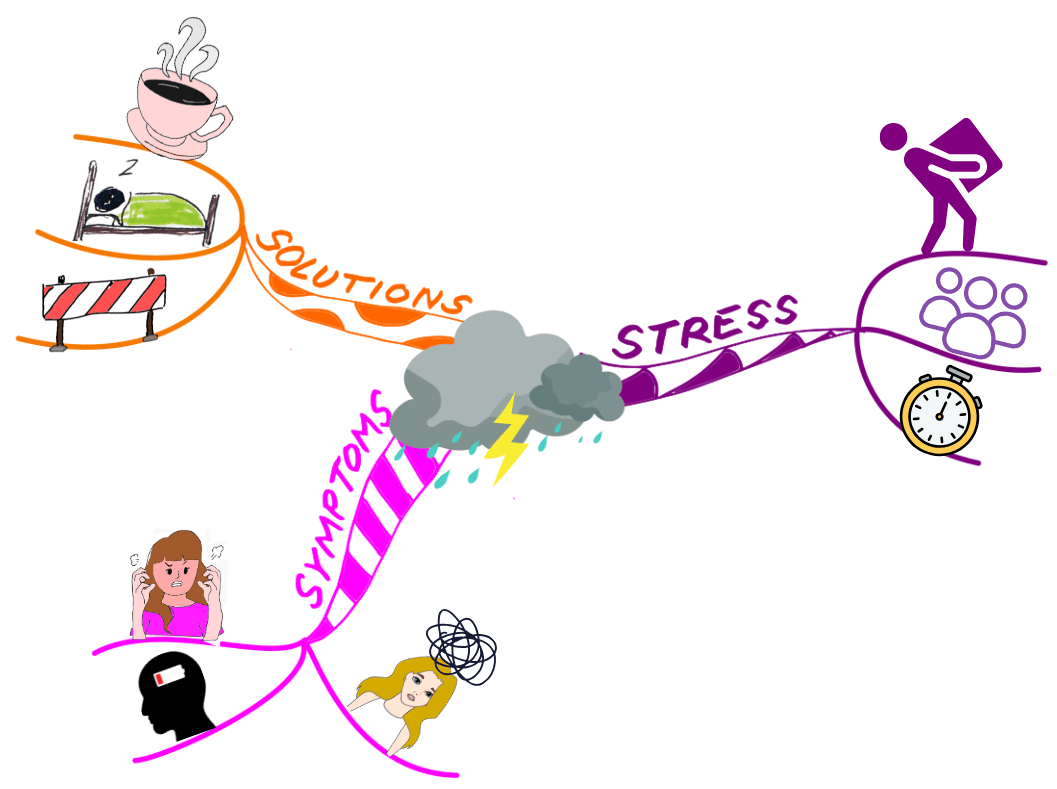
Struggling with stress and burnout? Create a Mind Map to:
Identify stressors (workload, lack of downtime, people-pleasing).
Connect stress responses to physical symptoms (headaches, fatigue, brain fog).
Map out solutions (more breaks, boundaries, better sleep habits).
🔥 Why This Works: Instead of feeling overwhelmed by emotions, Mind Mapping externalises them, giving you clarity and control.
🎯 Secret #3: Supercharge Your Memory Using Psychology-Based Mind Maps
Ever wished you could remember names, dates, and concepts effortlessly?
Psychology holds the secret to better memory—and Mind Mapping puts it into action.
Why Mind Mapping Works for Memory
Your brain remembers information when it’s:
✔ Organised visually (your brain LOVES images)
✔ Emotionally engaging (colours, doodles, and personal meaning)
✔ Structured in meaningful chunks (think grouping info into categories, not long lists!)
How to Use Mind Maps for Rapid Recall
1️⃣ Use a Hierarchical Structure – Place core ideas in the centre, then build branches for subtopics to break info into easy-to-recall chunks.
2️⃣ Doodle Your Data – Add icons or simple drawings to create a stronger visual imprint in your brain.
3️⃣ Use Mnemonics & Keywords – Instead of full sentences, use single words and images to trigger recall.
🎯 Example:
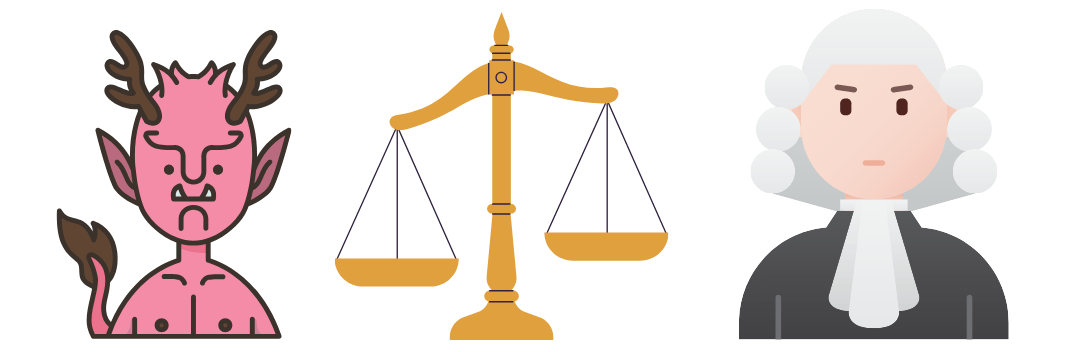
If you’re studying Freud’s theory of personality, your Mind Map might include:
ID (impulses & desires) → represented as a mischievous imp
EGO (reality & balance) → drawn as a scale
SUPEREGO (morality & rules) → symbolised as a jude
🔥 Why This Works: Instead of memorising dry textbook definitions, you’ve created a visual, memorable structure your brain actually enjoys recalling.
🔄 Secret #4: Rewire Your Brain for Better Habits & Decision-Making
Ever set a goal—only to abandon it a week later?
Neuroscience tells us that habits form through repeated neural pathways—and Mind Mapping can help reinforce positive habits while breaking bad ones.
Mind Map Your Habits & Goals
1️⃣ Central Image = Your Goal – Draw an image of what success looks like (e.g., a trophy for a fitness goal, a book for writing progress).
2️⃣ Branches for Actions & Obstacles – Identify small, daily actions that lead to success—and the roadblocks that might derail you.
3️⃣ Connect Triggers & Rewards – Show how small habit loops work (e.g., “Wake up → drink water → start writing” or “Feeling stressed → go for a walk instead of scrolling social media”).
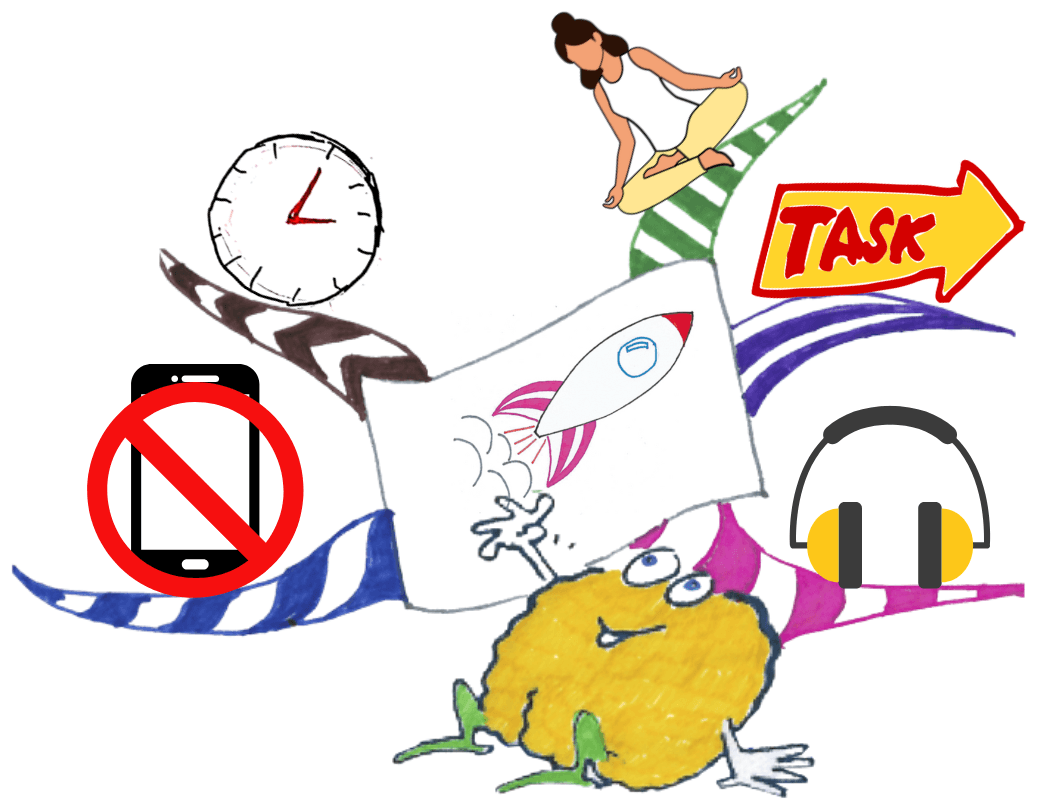
🎯 Example:
Want to improve focus and productivity? Your Mind Map might include:
Focus Boosters: Deep work sessions, single-tasking, mindfulness
Distraction Triggers: Social media, email notifications, noisy spaces
Habit Replacements: Turning off phone alerts, using time-blocking
🔥 Why This Works: Mind Mapping trains your brain to think in systems, making habit formation and decision-making way easier.
💡 Final Thoughts: Why Mind Mapping is a Game-Changer for Psychology
Psychology helps us understand how we learn, think, feel, and behave—and Mind Mapping brings those insights to life in a powerful, visual way.
Here’s why Mind Mapping is your brain’s best friend:
✔ Boosts memory & recall using psychology-backed methods
✔ Helps break down complex psychological theories into clear visuals
✔ Rewires your brain for better habits and smarter decisions
✔ Improves emotional intelligence & self-awareness
✔ Makes learning psychology fun, engaging, and unforgettable
📢 Want to Unlock the Power of Your Mind?
Use Mind Mapping to master psychology, boost creativity, and sharpen mental clarity.
🎉 Join The Million Mind Map Newsletter today for your weekly round-up of expert tips and be the first to hear all the latest from Mind Mapping Expert HQ.
Now grab your pens and let’s map out a smarter, more self-aware YOU! 🚀🧠

Categories

THE PROJECT
(2)

MIND MAPPING
(2)

JOIN IN
(2)

Latest Posts

About me

Hi there 👋 My name is Elaine Colliar, 5 Times World Mind Mapping Champion and your Mentor in Mind Mapping!

Ready to Think Smarter? Join Our Free Mind Mapping Community!
Learn directly from TWO World Champions in Mind Mapping, get exclusive resources, and connect with like-minded thinkers who are transforming their productivity, careers, and creativity.

Get Smarter, One Weekly Idea at a Time
We simplify all our Mind Mapping news for you. Get the week's best insights, tips and news—all curated and delivered in one weekly digest. Organise your thinking, unlock creativity, and achieve more with less effort.
© 2025 The Mind Mapping Expert Ltd